

What’s the best way to support a child’s study routine and build good study habits?
Studying at home can be challenging for children for various reasons. Today we will go through what makes it challenging, and discuss some tips on how to create a suitable study environment for your child!
Reasons why your Child May Struggle to Study at Home
When studying at home, students can get frustrated and “hit a wall” in their studies. This can be due to having too many distractions, problematic study techniques, or not having the right study space. So let’s talk about it!
Too Many Distractions
One of the biggest challenges in studying at home is being distracted by things in the comfortable space of a student’s house. Unlike spaces designed for learning, like school or libraries, home is also a place for relaxation, and is full of interesting things that can pull your concentration away from studying.
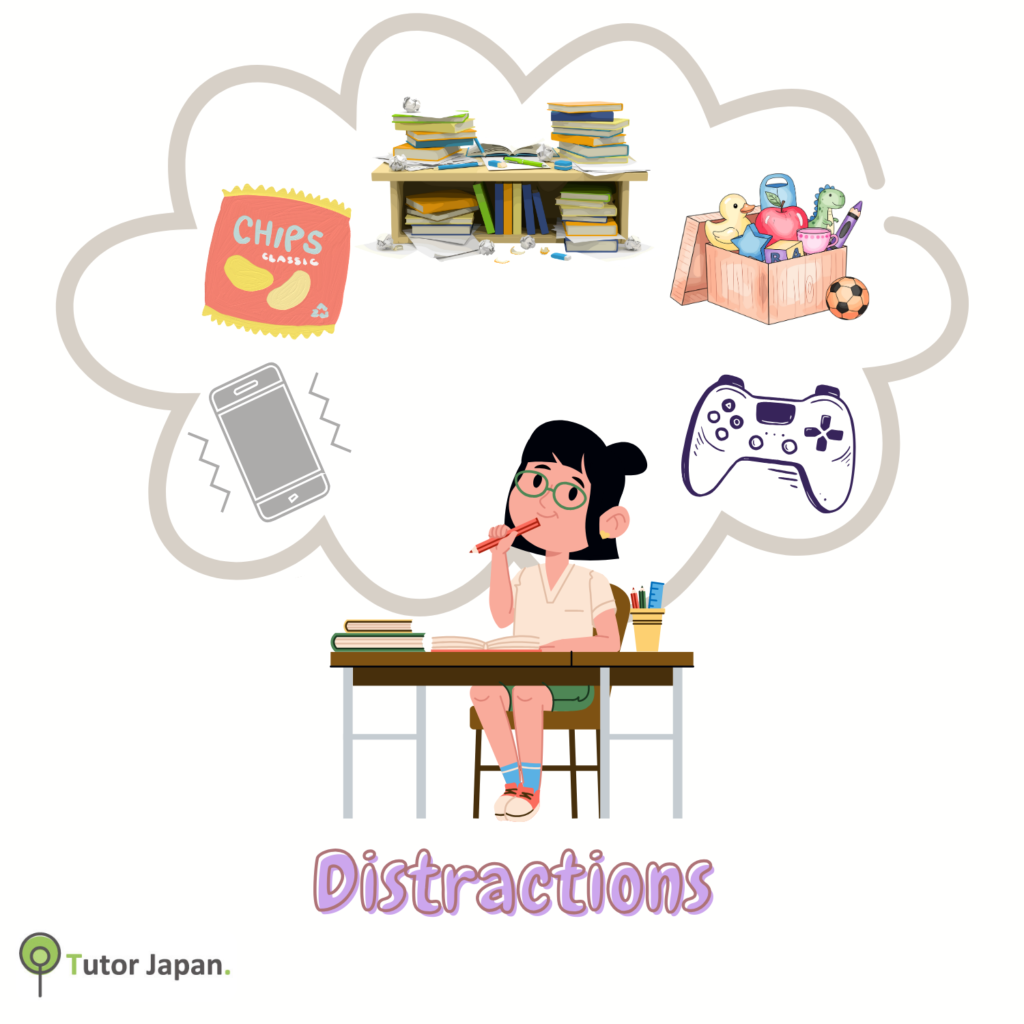
Different things are distracting to different people, so it’s best to talk to your child directly about what things they find distracting. This can also help increase their awareness of their own focus levels. Many children get distracted when their desk is full of items, such as their favorite books or toys, or objects that are easy to fidget with like too many pens etc.
Additionally, in the digital age, notifications from phones, tablets, and computers disrupt your child’s ability to focus. It’s best to turn these devices off or set them to silent, or even to put them in a different room so that a lit up screen cannot intrigue your child’s interest.
Lack of a Designated Study Space
Where does your child usually study? Are they sitting at a quiet desk, or on the couch in the living room? Are they lying on their bed while studying? These positions can make a huge difference! Firstly, your study environment should be a designated study space, so we recommend working at a table or desk, rather than studying in bed or on the couch.
Also, make sure to set up your desk and chair properly, and use a chair to ensure proper posture. Keep your desk uncluttered and organized. With regular studying at your desk and chair, your body will get used to focusing in that specific setting.
Another factor to consider is the position of the desk. Facing a window allows for direct natural sunlight exposure, but it also creates unnecessary distractions from outside. It is recommended to place a desk perpendicular to the window to allow natural sunlight to light up the room while minimizing distractions.
Poor Time Management
The way that students make use of their study time also changes its effectiveness! Some children can study continuously until all assignments are completed, whereas others struggle to even get started. So what’s the best study pattern to avoid frustration and stress? Depending on your child’s age, some students will manage their study time by themselves, but often get stuck in a pattern of unfocused frustration.
Encourage students to focus intently when in “work” mode, and to clearly separate “break” mode. It is not recommended to take a break right at your desk, which makes it hard to shift gears between focus levels. A pattern of shorter but completely focused sessions is very effective, and a good motivator for students! If the weather is nice, it is also a good idea to get some fresh air and walk around the block to move your body.
For some students, setting clear time goals to organize the study session can be very helpful. One popular method is the Pomodoro Technique, where students study for 25 minutes and then take a 5 minute break. Repeat this pattern until you’ve reached your goals, and take longer breaks every few hours. Short but frequent study sessions also help to keep students motivated while studying.
Not Knowing Where to Start
Another big reason why your children may struggle to study at home is not knowing how to start. Organizing all the homework they have to deal with alongside upcoming tests is an important skill that they are still learning! To help your child learn how to prioritize, it’s good to make a list together, and to decide which activity to do first. For tougher subjects or assignments, consider choosing a small reward for your child once the task is completed. The ability to choose the goal can be as much motivation as the goal itself! Examples include choosing what movie to watch in the evening, what you will eat for dinner, or their favorite treat.
Best Practices
DOs
- Create a designated study space
- Keep study area organized (no clutter!)
- Create a study routine and stick to your schedule
- Prioritize assignments
- Incorporate breaks and move your body
- Remove phones (on silent) and other distractions
- Stay hydrated and enjoy snacks
DON’Ts
- Have your desk cluttered with books, toys, gadgets, or pencils.
- Study on your bed, floor, or couch.
- Study without having a clear plan of what you have to do
- Be afraid to take breaks
- Take your breaks in your study space or at your desk
- Keep your phone nearby with sound on